
How we turned a building’s site photos into a 94-page inspection report in a day
We matched 427 of 430 site photos to their inspection locations, then built the report.
- Claude
- OpenAI
 Claude
 OpenAI
- Client
- Facade team in a UK building safety group
- Documents
- Photos and notes from a group chat
- What we built
- A photo sorter, match checks and a report builder
- What they get
- A report in the firm’s format, by location
- Time per report
- A day, against four to five working days by hand
 Claude
 GPT
430 photos in a group chat
The crew photographed the layers exposed at inspection openings cut into the wall and posted the photos to a group chat. Writing the report by hand took four to five working days.
Chat order restored first
The exported files had lost the chat sequence, so we restored it and put each photo beside the crew note before it. Photos from different locations were still mixed together, but the sequence helped us match them.
Each photo matched twice
Two independent checks recorded the opening, wall layers and any tape measurements for all 430 photos. Neither saw the other’s answers. They agreed on 425.
Uncertain matches checked again
We rechecked 107 photos, covering every disagreement and a sample of agreed matches. The first answers were hidden. This caught a mistake both first checks had made. Our team checked the remaining disagreement against the photos.
A 94-page report in a day
The report covered all 29 locations, with labelled photos, wall layers and measurements. We matched 427 of 430 photos to their locations. The client’s team checks the report and resolves outstanding questions before sign-off.
Each photo checked against its inspection location.
We started with 430 photos and crew notes from 29 locations.
- 29
- locations covered
- 427
- photos placed
- 1
- photo to confirm
- 2
- not site photos
of 430 placed
Uncertain matches checked without the earlier answers.
We checked disagreements and a sample of agreed photos.
First checkeach photo matched
- 01
- 01
- 01
- 02
- 02
- 02
- 03
- ?03
- 03
- 04
- 04
- 04
Separate checkfirst answers hidden
- 01
- 01
- 01
- 02
- 02
- 02
- 03
- ?04
- 03
- 04
- 04
- 04
- 425
- of 430 agreed first time
- 107
- rechecked: every disagreement, plus a spot check
- 1
- settled by our team
- 427 of 430photos matched to their inspection locations
- 425photos placed the same by two checks
- 94 pagescovering all 29 inspection locations
- 1 dayfrom photo chat to finished report
“I haven’t seen an inspection report that detailed in my career.”
Read the full story
A facade investigation team spent four to five working days turning each building’s site photos into a report. We built a system that matches the photos to the openings cut into the walls and prepares the report. On this building, the 94-page report was ready the next day.
A thousand photos in a group chat.
The report is the evidence a fire engineer relies on. Writing it was the slowest part of the job.
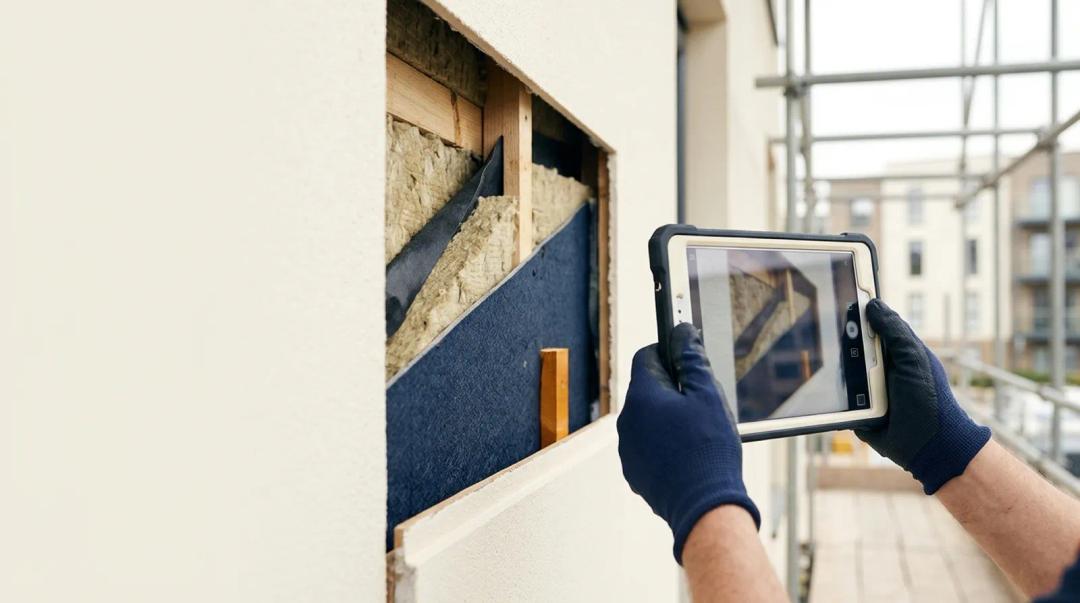
Crews cut small openings into the outside walls of residential blocks, record each layer of the wall and the fire barriers hidden inside it, photograph everything and patch the hole. The photos go into a group chat, one per building. A big job means 1,000 to 2,000 of them.
Then someone downloads the lot, pastes them into a document and writes it up, opening by opening. That took four to five working days per report, at six hours a day. And the photos arrive out of order, so working out which close-up belongs to which opening usually takes someone who was on site.
“Writing these reports is exceptionally time-consuming and a waste of my time.”
Each photo checked against its inspection location.
We started from the building’s photo chat: 430 photos and the crew’s notes from 29 locations.
The exported files had lost the chat sequence, so we restored it first. Photos from different inspection locations were still mixed together, but the sequence helped us match them. Without it, some close-ups gave no clue to their location.
Claude and GPT checked every photo separately so we could compare their answers. Each recorded the inspection location, visible wall layers and fire barriers, tape measurements and anything it could not identify.
The two checks agreed on 425 of the 430 photos. They also found 53 photos that belonged to a different opening from the note posted just before them.
Uncertain matches checked without the earlier answers.
We checked the disagreements and a sample of the photos both readings had placed at the same location.
A second pair of checks covered 107 photos, including every disagreement and a sample of agreed matches. Neither check saw the earlier answers. This found a mistake both first readings had made.
Our team settled the final close call by eye. Every photo was accounted for: 427 placed, one flagged for the client’s team to confirm, and two set aside because they weren’t site photos at all.
Our checks also showed that the site notes called one board plywood when the photos showed a different board at 21 openings, and that 8 of the 29 openings had no photo of the repair. We sent both back to the team to resolve.
A 94-page report, the next day.
Then we built the report.
Each opening got its own record: labelled photos, a colour strip showing the wall layers, fire barrier details and measurements. The system placed the labels on each photo, and our team checked every label by eye.
Two independent checks compared the report’s facts with the photos and notes for all 29 locations. We corrected the pages against those findings and reviewed the finished report before handing it over. The investigation team remains responsible for resolving gaps and signing off the inspection report.
From photo chat to a finished 94-page report took a day. The first full draft was ready in eight hours.




Start with the photos from a recent job.
Send us the photos from a recent job. We’ll send back the report.